Disasters are a growing part of childhood – and children experience them differently
Disasters are becoming more frequent and complex. Babies, children and young people are uniquely affected, with impacts shaped by their stage of development, relationships and environments.
Children’s development continues during disasters
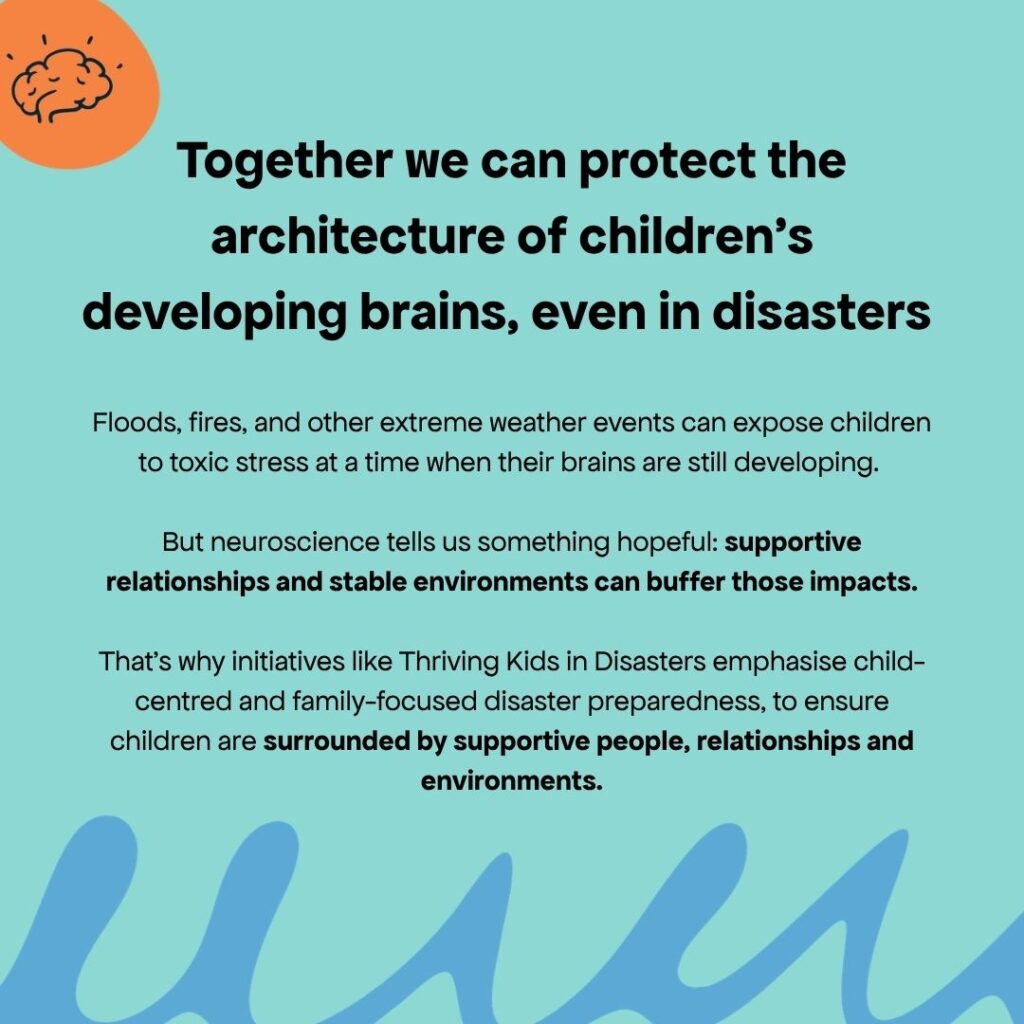
Disasters can disrupt the environments and relationships that support healthy brain development. Early experiences of stress and disruption can shape learning, behaviour and wellbeing across the life course.
Strong relationships help children cope and recover
Consistent, supportive relationships – including everyday back-and-forth interactions – help children feel safe, process experiences and build resilience during and after disasters.
Resilience is built through supports around children
Children are more likely to cope and recover when we reduce adversity and strengthen the supports around them – including families, communities and services.
Children’s experiences and voices matter
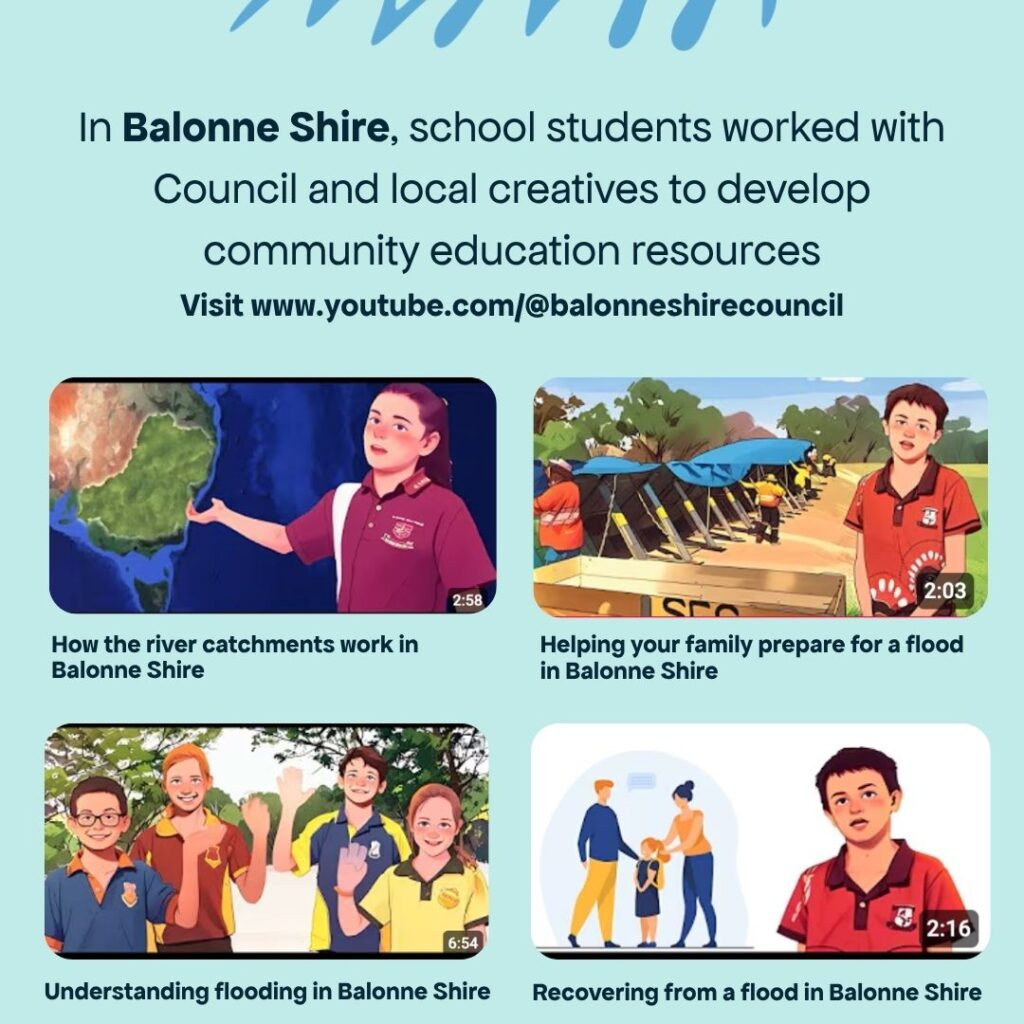
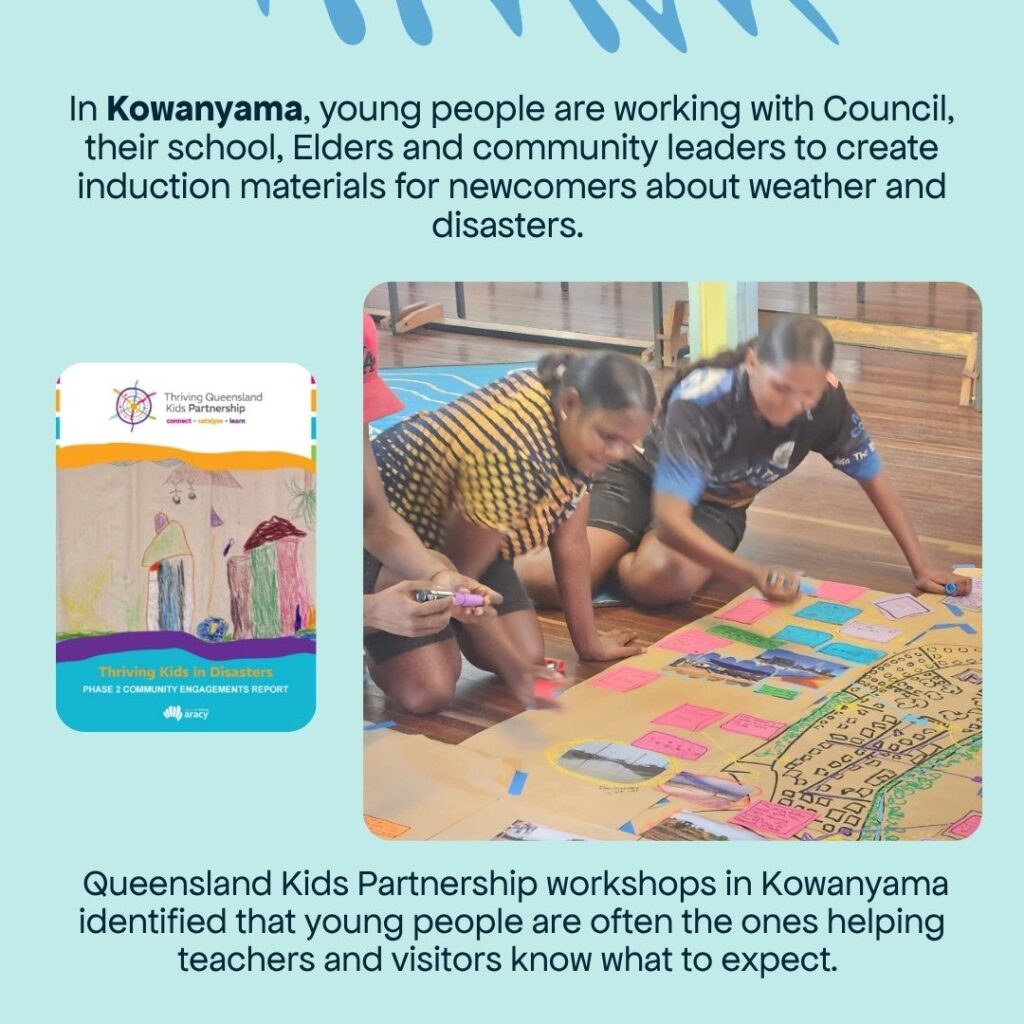
Children and young people have unique perspectives and capabilities. When we listen to and involve them in decisions, we strengthen both their wellbeing and community resilience.
Preparation, response and recovery all matter
Supporting children in disasters is not just about response. It includes preparing before events, supporting recovery over time, and recognising that impacts can emerge later and in different ways.
Communities, services and systems all play a role
Children’s outcomes in disasters are shaped by how well systems work together – across health, education, community services and disaster management. Coordinated, child-focused approaches create stronger outcomes.
We can design disaster approaches that help children thrive
When we apply what we know about child development, trauma and resilience, we can design disaster preparedness, response and recovery in ways that support children to not just cope, but thrive.