What we do / Our initiatives
Queensland Early Oral Language Project
Early oral language skills build children’s health by providing the foundations for social interaction, literacy and learning, participation and wellbeing.
When communities support early oral language – from pregnancy to starting school – we all benefit: family relationships are strengthened, children arrive at school ready to connect and learn, and we lay the foundation for lifelong health and participation.
We can all play a role in building early oral language. The key is lots of high quality ‘serve & return’ interactions with responsive adults – in all the places that children live, learn, grow and play.
This project aims to bring together existing work – connecting programs, services and people – to support each family and community according to their local needs.
We need coordinated and consistent efforts across ALL aspects and systems related to a child’s life. This will boost language, learning and health outcomes for every child and family. And create fairer, healthier, safer communities for all.
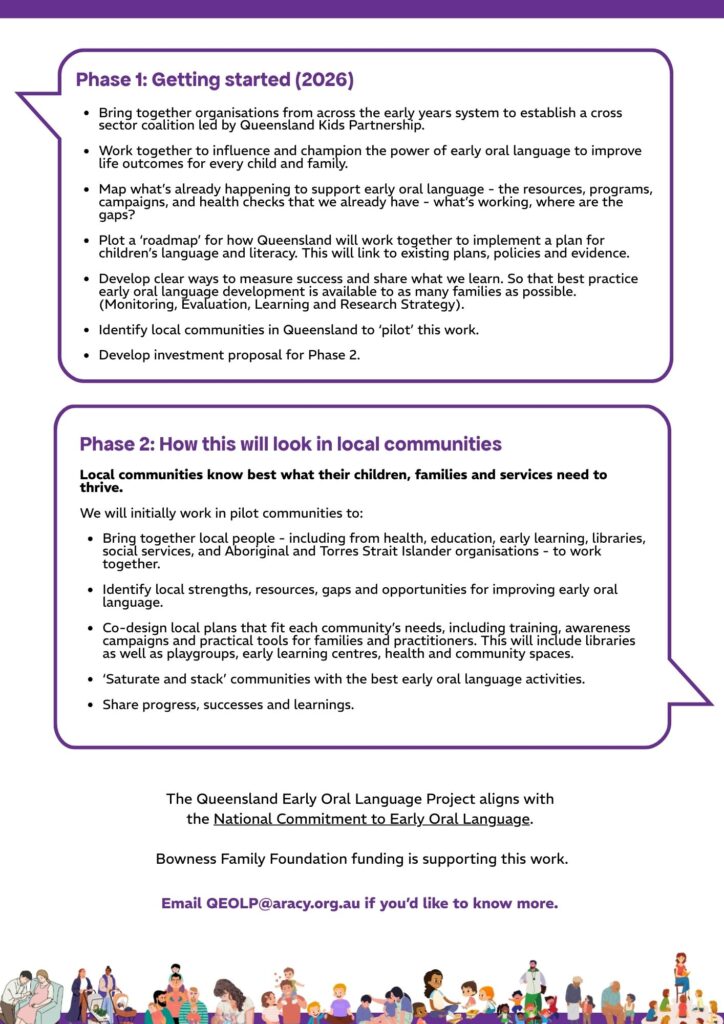
Phase 1: Getting started (2026)
Bring together organisations from across the early years system to establish a cross sector coalition led by Queensland Kids Partnership.
Work together to influence and champion the power of early oral language to improve life outcomes for every child and family.
Map what’s already happening to support early oral language – the resources, programs, campaigns, and health checks that we already have – what’s working, where are the gaps?
Plot a ‘roadmap’ for how Queensland will work together to implement a plan for children’s language and literacy. This will link to existing plans, policies and evidence.
Develop clear ways to measure success and share what we learn. So that best practice early oral language development is available to as many families as possible. (Monitoring, Evaluation, Learning and Research Strategy).
Identify local communities in Queensland to ‘pilot’ this work.
Develop investment proposal for Phase 2.
Phase 2: How this will look in local communities
Local communities know best what their children, families and services need to thrive.
We will initially work in pilot communities to:
Bring together local people – including from health, education, early learning, libraries, social services, and Aboriginal and Torres Strait Islander organisations – to work together.
Identify local strengths, resources, gaps and opportunities for improving early oral language.
Co-design local plans that fit each community’s needs, including training, awareness campaigns and practical tools for families and practitioners. This will include libraries as well as playgroups, early learning centres, health and community spaces.
‘Saturate and stack’ communities with the best early oral language activities.
Increase regular language and development checks, identify gaps in monitoring, and link families to support early – even while waiting for specialist services.
Share progress, successes and learnings.
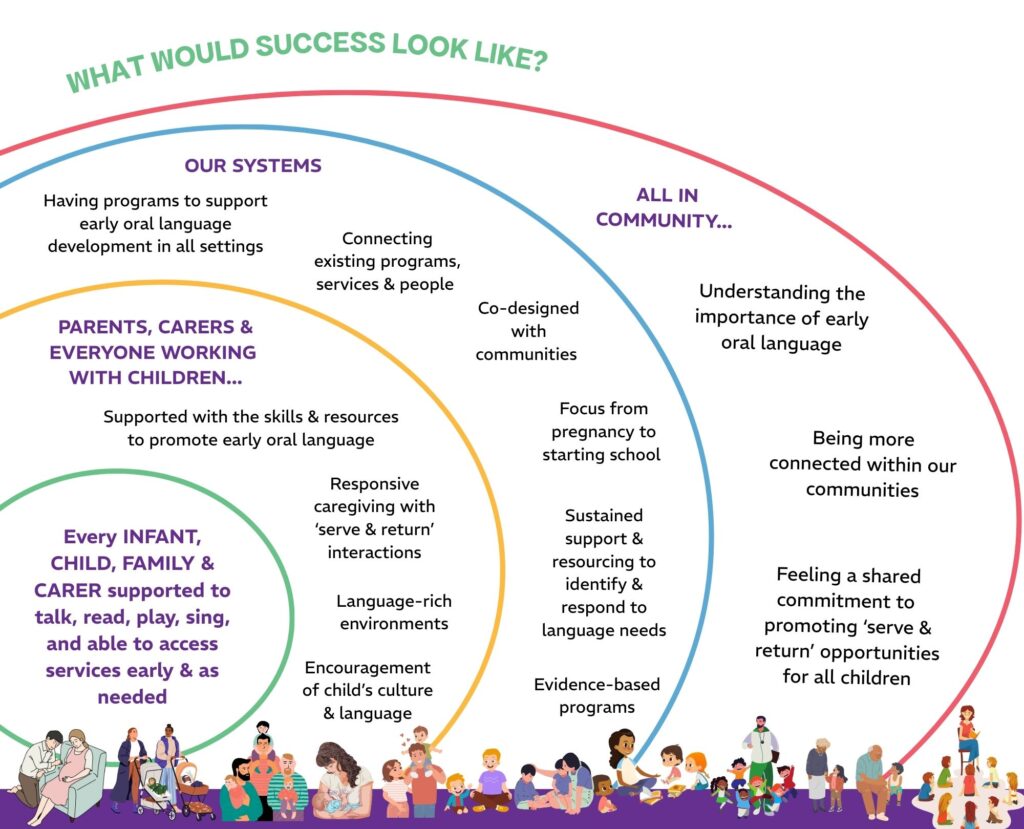
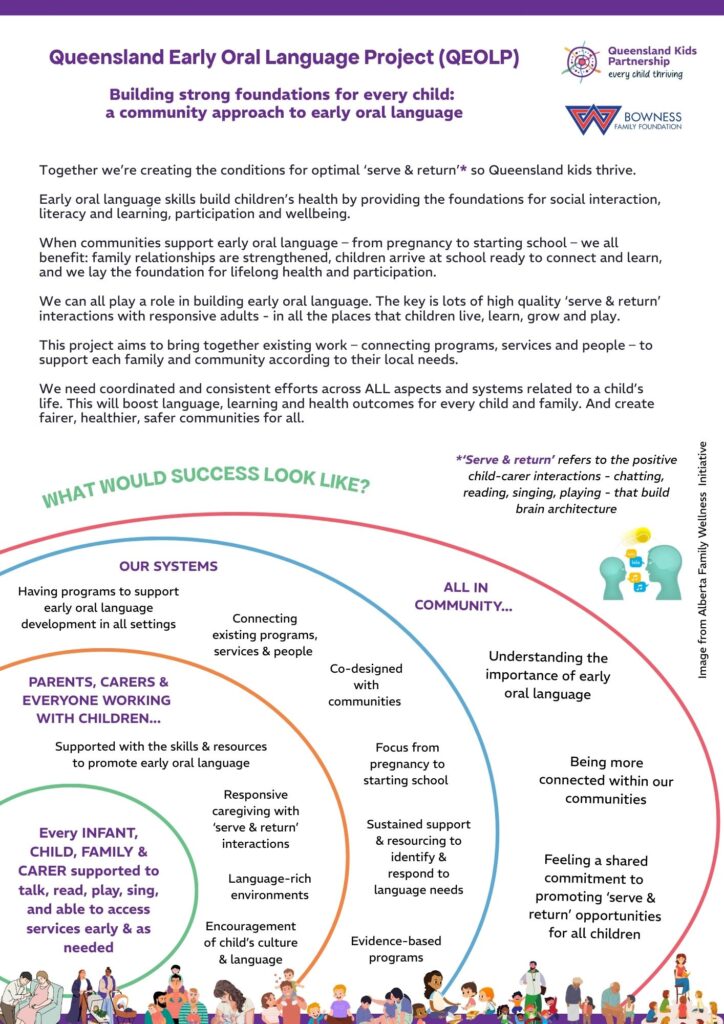
What would success look like?
Every INFANT, CHILD, FAMILY & CARER…
- Supported to talk, read, play, sing, and able to access services early and as needed
PARENTS, CARERS & EVERYONE WORKING WITH CHILDREN…
- Supported with the skills & resources to promote early oral language
- Responsive caregiving with ‘serve & return’ interactions
- Language-rich environments
- Encouragement of child’s culture & language
OUR SYSTEMS…
- Having programs to support early oral language development in all settings
- Connecting existing programs, services & people
- Co-designed with communities
- Sustained support & resourcing to identify & respond to early oral language needs
- Evidence-based programs
- Focus from pregnancy to starting school
ALL IN COMMUNITY…
- Understanding the importance of early oral language
- Being more connected within our communities
- Feeling a shared commitment to promoting ‘serve & return’ opportunities for all children
WHAT WE DO
SERVE & RETURN
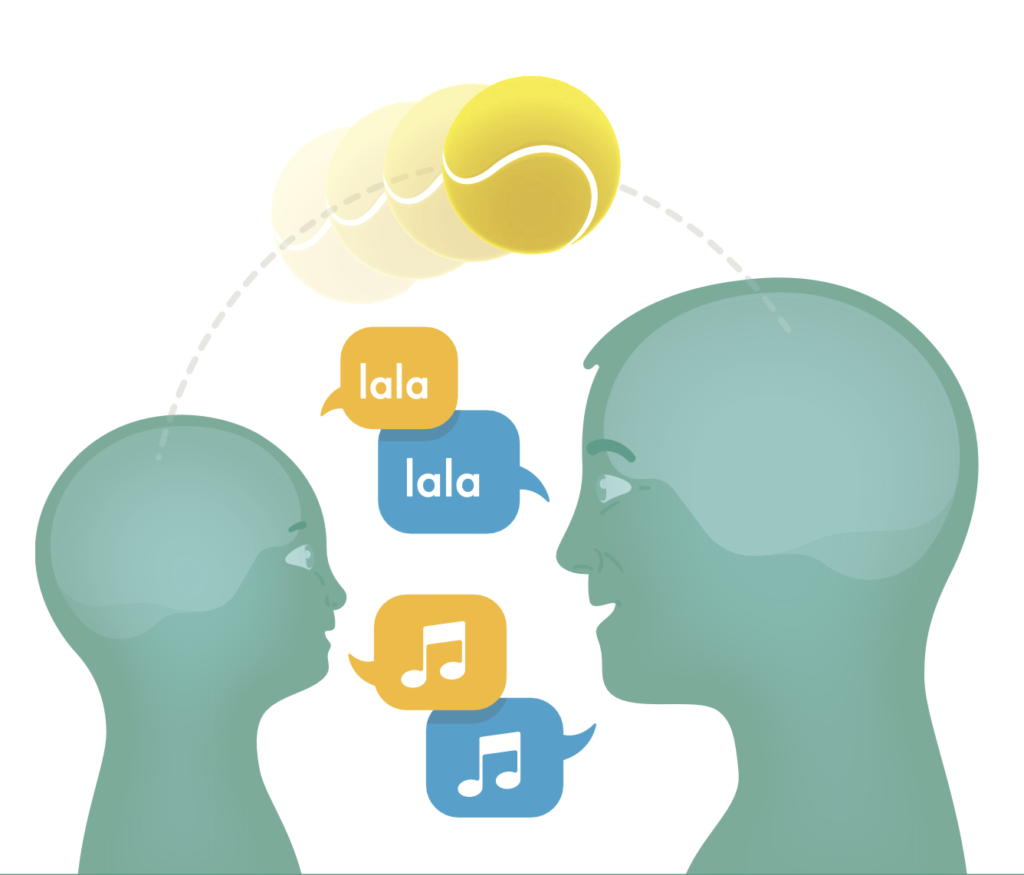
Babies and children develop through back-and-forth interactions with caregivers, like in a game of tennis. Scientists now know that the influences of genes and experience interact to shape the developing brain. The active ingredient is the ‘serve and return’ relationships that babies have with their parents and other caregivers in their communities.
Download the Theory of Change for the Queensland Early Oral Language Project.
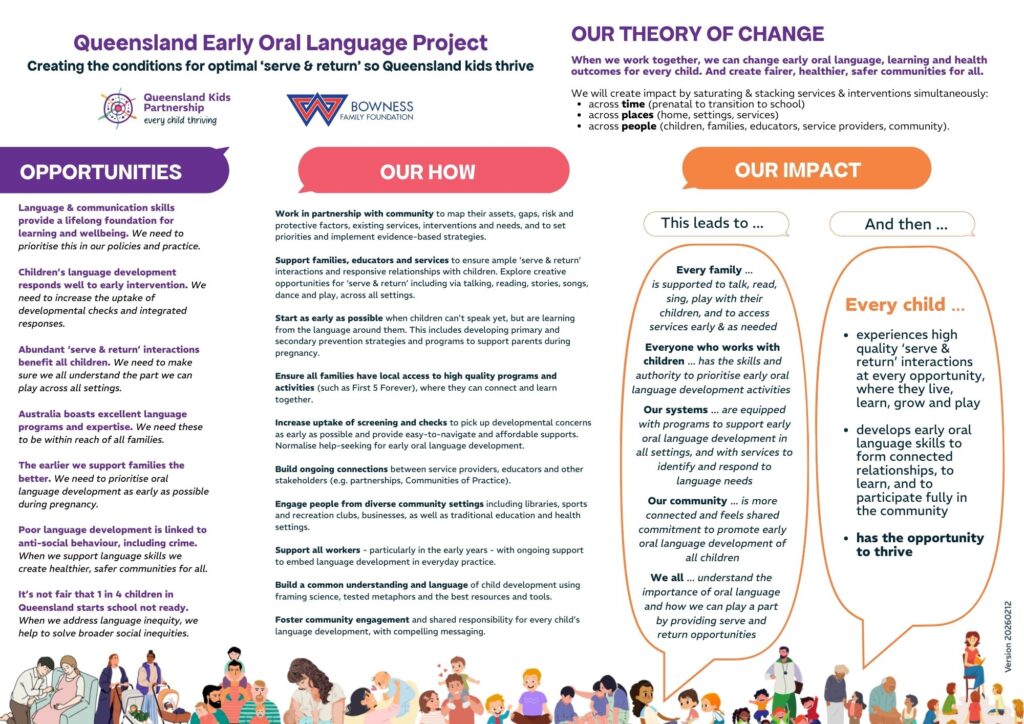
Download the 2-pager about the Queensland Early Oral Language Project.
Get involved
Email QEOLP@aracy.org.au if you’d like to know more.
Bowness Family Foundation funding is supporting this work.
The Queensland Early Oral Language Project aligns with the National Commitment to Early Oral Language
More Initiatives
Pathway Card Heading Will Go Here
Lorem ipsum dolor sit amet, consectetur dim to adipiscing elit. Ut elit tellus, luctus nec amet ullamcorper mattis, pulvinar dapibus leo.
Pathway Card Heading Will Go Here
Lorem ipsum dolor sit amet, consectetur dim to adipiscing elit. Ut elit tellus, luctus nec amet ullamcorper mattis, pulvinar dapibus leo.
Pathway Card Heading Will Go Here
Lorem ipsum dolor sit amet, consectetur dim to adipiscing elit. Ut elit tellus, luctus nec amet ullamcorper mattis, pulvinar dapibus leo.
Pathway Card Heading Will Go Here
Lorem ipsum dolor sit amet, consectetur dim to adipiscing elit. Ut elit tellus, luctus nec amet ullamcorper mattis, pulvinar dapibus leo.