Qld Places Network (QPN) Annual Report 2025-26
The Queensland Places Network (‘the Network) Annual Report has been prepared by Queensland Kids Partnership (as the Network’s convenor) on behalf of the Network’s nodes in collaboration with participating philanthropic partners. The collaborative approach to reporting demonstrates shared commitment and accountability. Financial year of 2026 is the first ‘official’ year of the Network’s activities, although […]
Collaborative Commissioning reports (Qld Places Network)
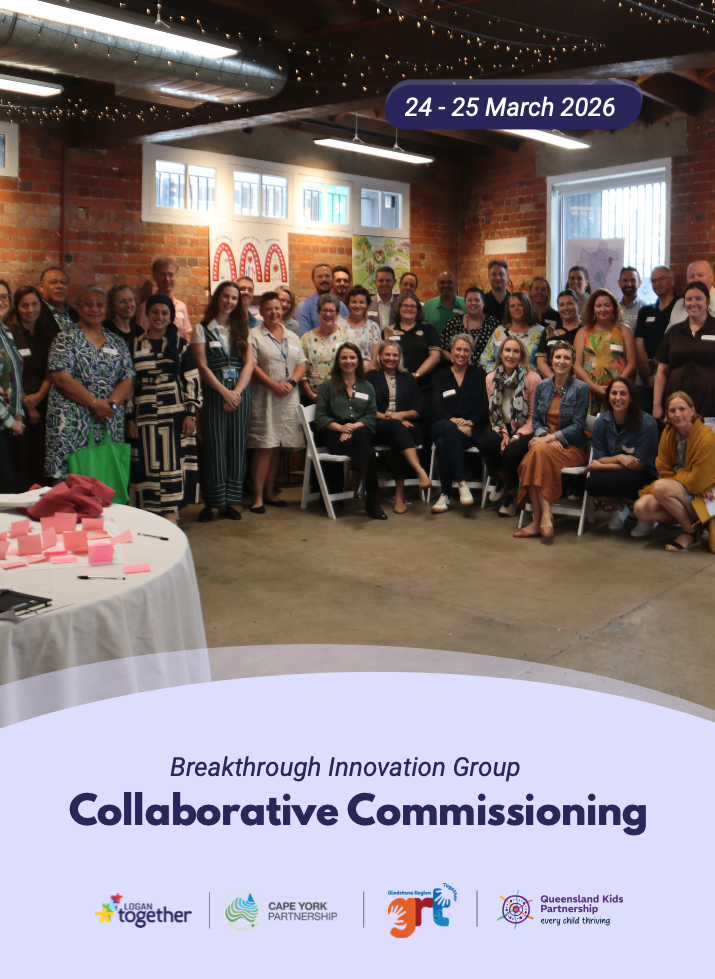
In March 2026 the Queensland Places Network held a 2-day workshop, designed, facilitated and hosted by Logan Together to explore the current collaborative commissioning landscape, understand what is working well, where the barriers sit, and identify the opportunities that could be unlocked through a more joined-up effort. The following resources share the outcomes of that […]
Framing Checklist
Framing is about the words, images and messages we choose – and the way we tell the story. This guide helps us make framing choices that build understanding and drive positive change for children, families and communities. This resource is for everyone who is interested in communicating effectively about the wellbeing of children, young people […]
The Dictionary of Brain Building Words
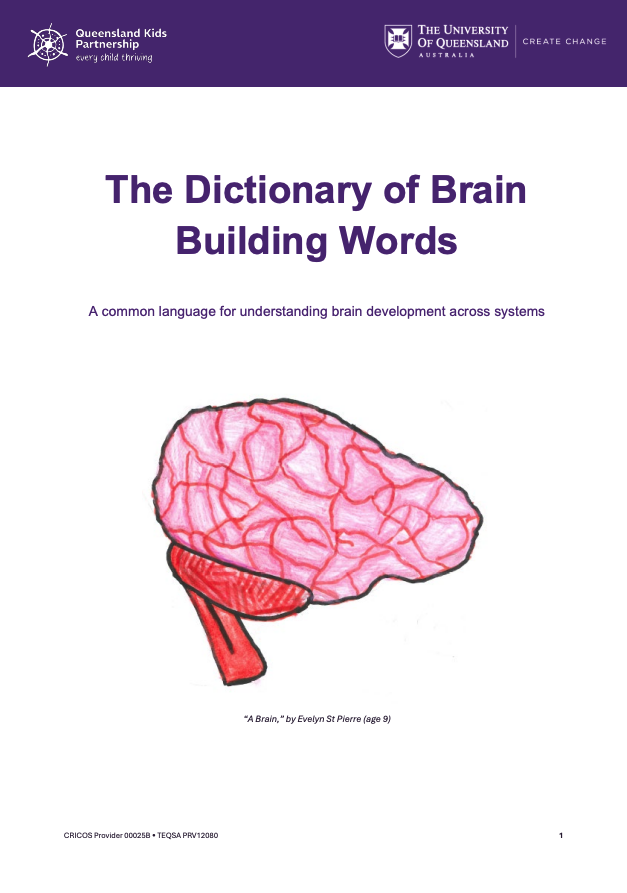
The Dictionary of Brain Building Words is a practical resource designed to help more people understand how children’s brains develop – and what we can all do to support that development. The words included in this dictionary represent those that are commonly referred to when applying understanding of brain development into policy and practice with […]
Year in Review 2024-2025
Read more about the period 1 July 2024 – 30 June 2025: the final stage of Phase 2 and a period of significant, measured progress for Queensland Kids Partnership (TQKP). The work to date across our focus initiatives has laid foundations upon which we successfully delivered every activity critical to activate the partnership, leading to […]
Brain Building in Queensland, Years 2 & 3 in Review, 2024 – 2025
When our caregivers and communities – and our schools, health and other services – are informed by neuroscience we can build healthier brains and bodies and improve learning, wellbeing and resilience. The Thriving Kids Brain Builders Initiative (TKBBI) is directly supporting child development in Queensland by applying neuroscience to improve practice and connection across the systems that support children, young people and their families. […]
Reframing Child Rights: How we talk about children’s rights matters
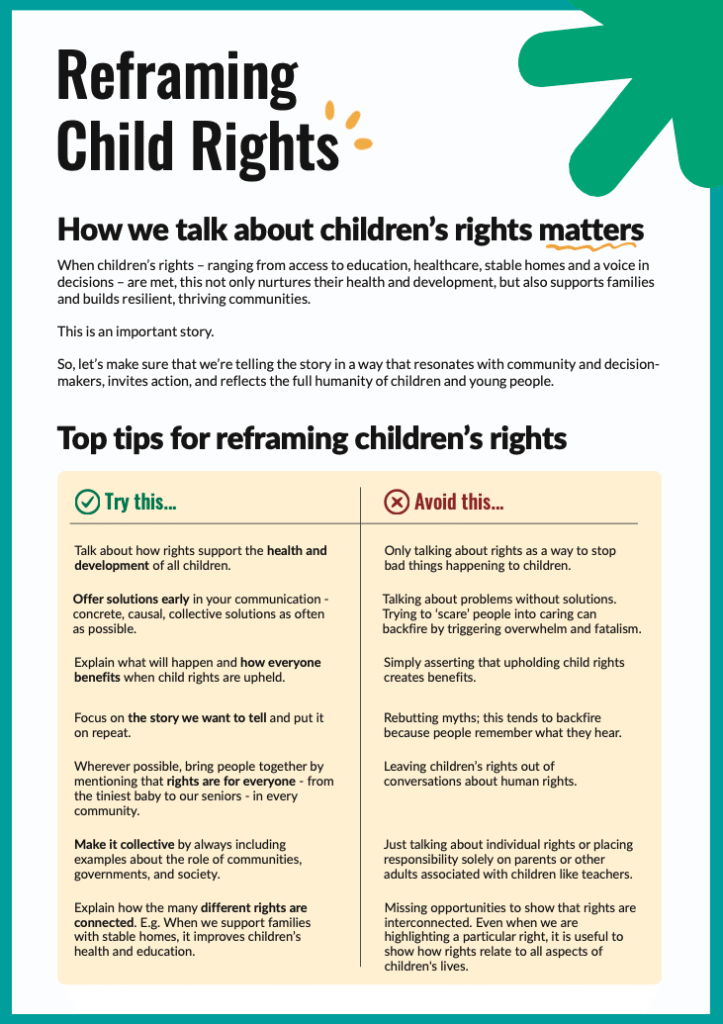
Reframing Child Rights: How we talk about children’s rights matters When children’s rights – ranging from access to education, healthcare, stable homes and a voice in decisions – are met, this not only nurtures their health and development, but also supports families and builds resilient, thriving communities. This is an important story. So, let’s make […]
Data Toolkit User Guide
To support every child in every community according to their needs, we need reliable, accessible data. When our systems are geared to manage information and to get it to the right people at the right time, we can make better decisions about how best to support children and families. Queensland Kids Partnership is working with […]
Framing Initiative: Evaluation Survey – Executive Summary
TQKP’s Framing Initiative connects and supports partners to communicate effectively about – or frame – child development and wellbeing to shift public understandings and drive policy change. In 2025, TQKP engaged the University of Queensland to conduct an evaluation of the effectiveness of TQKP’s Framing Initiative activities, training, resources, and implementation support based on online […]
Thriving Country Kids: Social Network Analysis (SNA) & systemic advocacy in rural, regional & remote Queensland
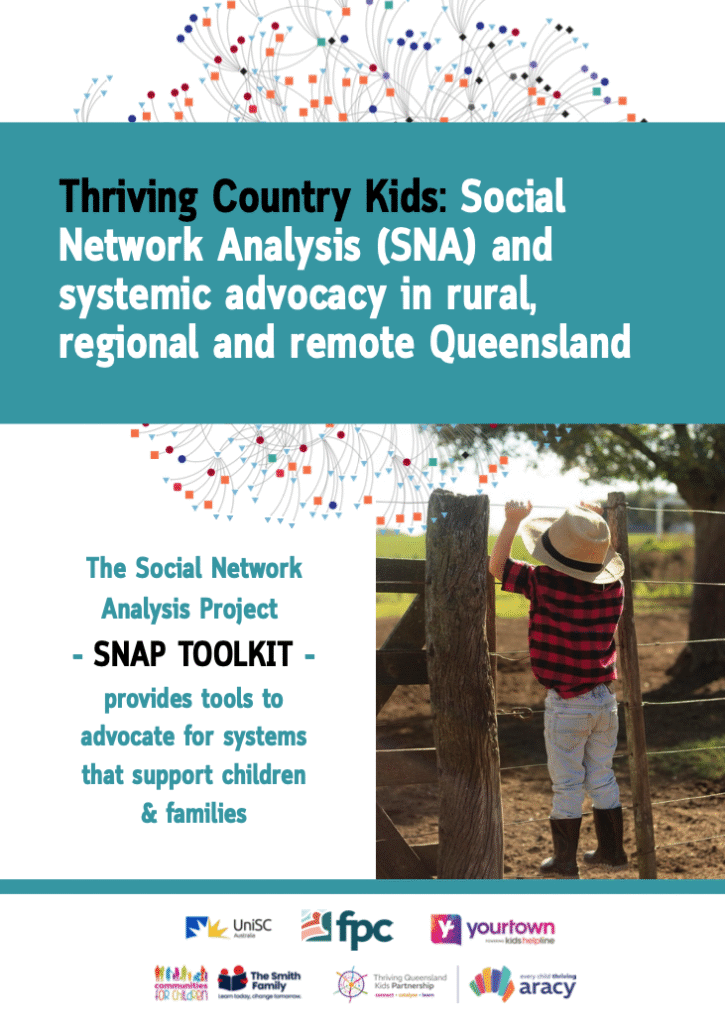
The Queensland Kids Partnership Country Collaborative undertook the Social Network Analysis Project (SNAP) to better understand the collaborations that underpin grassroots and strategic systems change efforts contributing to child wellbeing and development in rural, regional and remote Queensland. The group identified that a disconnect is often experienced between metropolitan and country communities and that centralised […]